


I met her on a meeting hall of government hospital. The hall was noisy, people were moving in and out, and everyone was busy with training and community meetings. In all that chaos, she did not shout, she did not stand up. But somehow, she still stood out.
She is the ASHA who learns fast. The first one to try any new app. The one who helps others install it, who explains step by step, who presses “submit” only after checking everyone is ready. When my Assamese-accented Hindi confuses the room, she smiles, turns to the others, and translates in simple words. Suddenly, everyone understands.
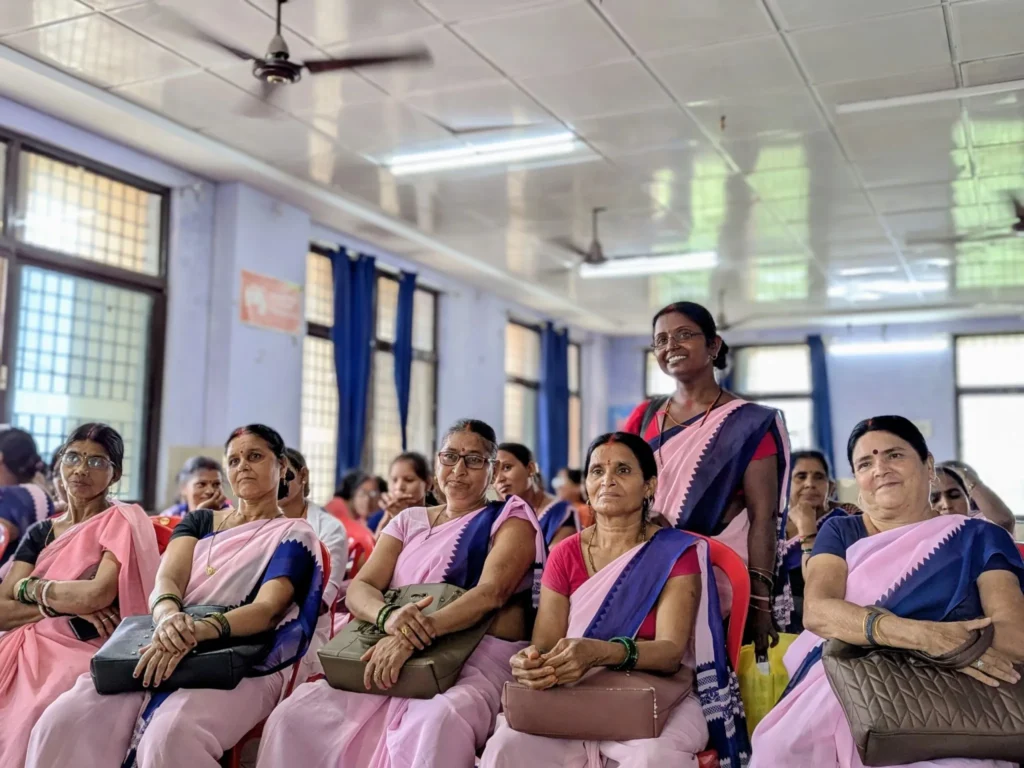
After every session, when others rush for tea, she walks up to me and asks, “Sir, next session kab hoga?” Then she quietly shares what others don’t say aloud: medicine stock-outs, families refusing visits, data entry problems, and the small frictions that never reach a report. If I want to know what is really happening in the field, I know exactly whom to ask.
But it is not only about work. She says “Good morning” and “Good evening.” She remembers birthdays. When I post a travel photo to Bootcamp on my WhatsApp status, she messages, “Happy journey, sir.” She notices the small things. She listens even when no one thinks anyone is listening.
One day, during a training, I felt invisible. I was explaining an app, but people were talking among themselves. For a moment, I thought, “Maybe no one is interested.” Just then, she raised her hand and asked, “Sir, ye wala apne toh bole hi nahi?” That one question pulled me back. She had been following every word.
That was the day I understood something about leadership. It is not always the person at the front with the mic. Sometimes, it is the person in the third row, quietly holding the group together, guiding others, and carrying the real stories of the community.
For me, she is not just an ASHA worker or even just a Master Trainer. She is the smartest ASHA in the room: leading her community, leading other ASHAs, and leading all of us a little closer to the ground reality…