

Six months ago, when I reached my allocated block, I carried more than my luggage. I carried assumptions, judgments, and long held beliefs, especially about indigenous communities and the Adivasi community. These thoughts had lived in my mind since childhood, unquestioned and unchallenged.
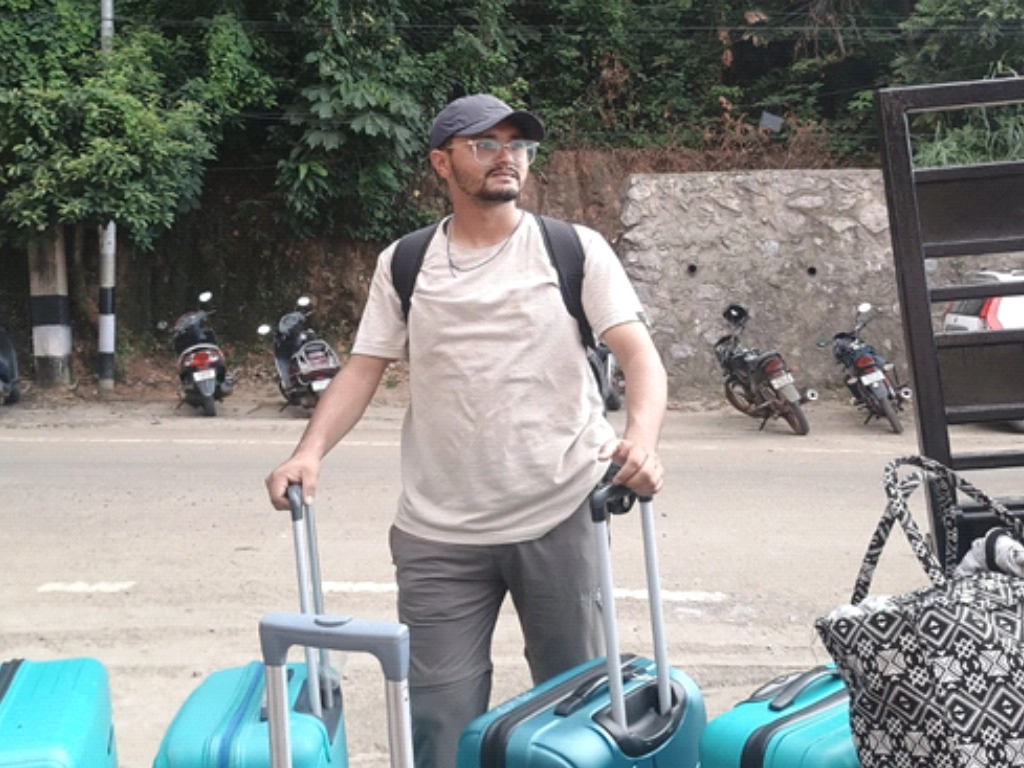
During the induction of the Gandhi Fellowship, I heard a word repeatedly, Sewa Bhav. I knew the term, but I had never paused to ask myself what it truly meant. One message was clear. This fellowship was not only about work on the ground. It was about serving with the right intent.
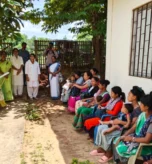
In my early days in the block, I genuinely wanted to practice Sewa Bhav, but I did not know how. My understanding was limited. I kept a distance. I behaved like an officer. I conducted awareness sessions, delivered messages, and returned. Conversations were few. Connections were missing.
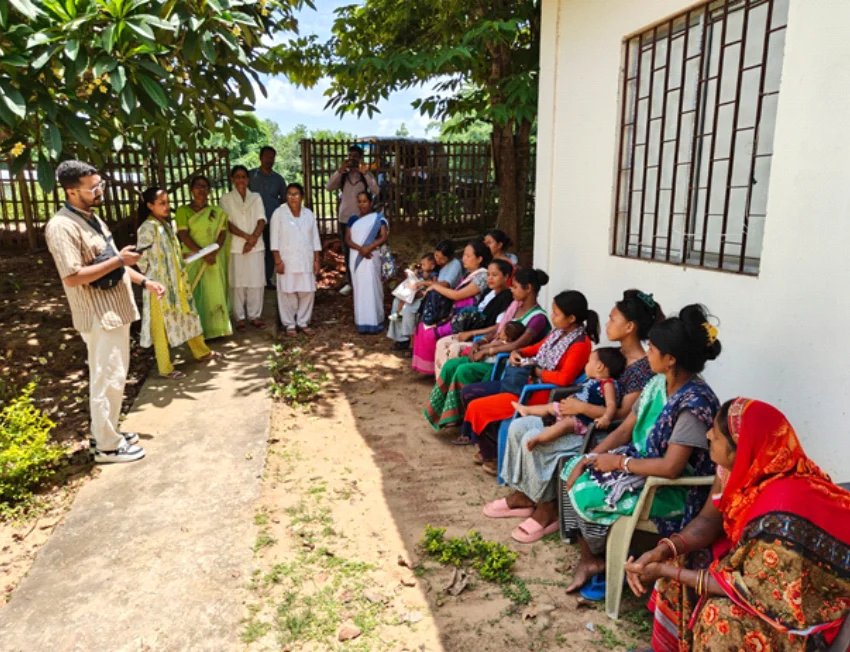
[Photo- Initially, before understanding Sewa Bhav, I used to deliver an awareness talks like a strict officer]
At times, I helped ANMs with their documentation, believing that I was serving them. But deep inside, I was hoping that my help would improve our working relationship. I did not realize then that expectations quietly weaken the spirit of service.
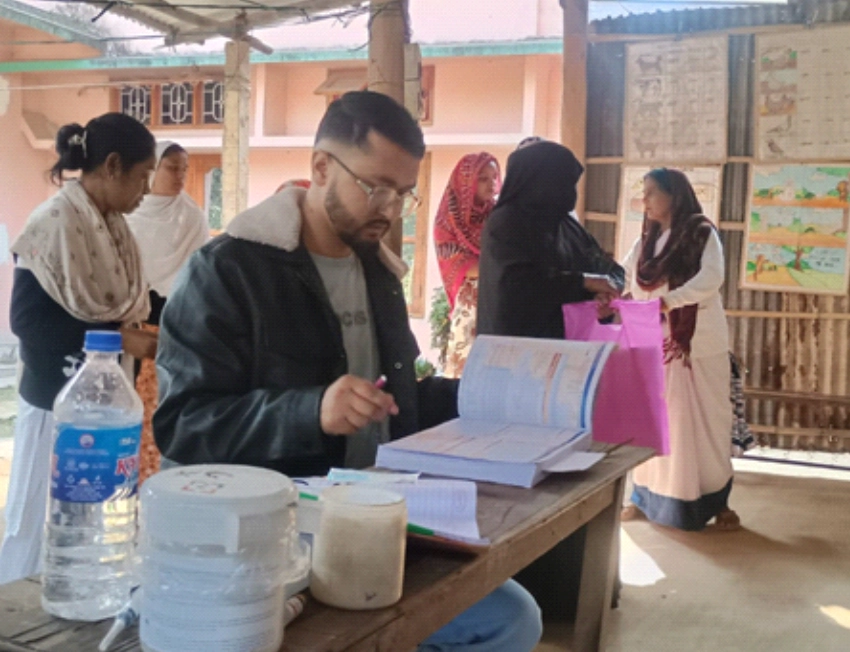
[ Photo- Helping Ashas felt like Sewa Bhav, yet my intention were not Expectation free]
Then came Community Immersion, a turning point I did not see coming.
We were asked to live with a host family for 21 days and experience life the way the community lives it. With the help of an ASHA didi, I identified a family, the family of a Gaonbura. When I explained the purpose of my stay, they agreed instantly. No questions. No hesitation. In one conversation, they opened their home to me.
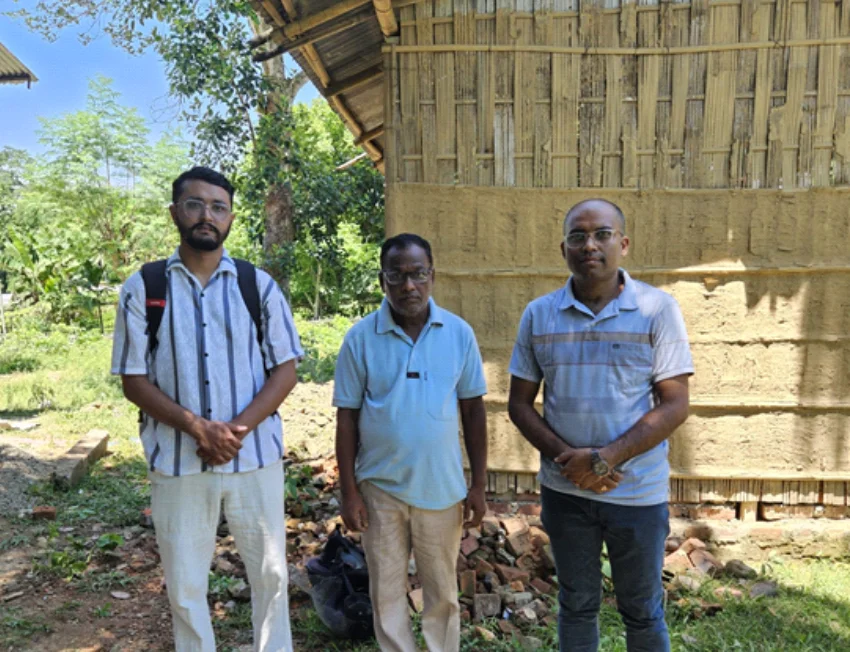
[ Photo- Me with my RM-1 and host family member before my CI]
Their family had eight members. Space was tight. Beds were few. Still, they were ready to share everything. I remember thinking how difficult it would be for me to do the same for a stranger. Yet for them, it seemed natural.
Just before starting my stay, I learned that my host family belonged to the Adivasi community, the very community I had silently judged for years. Fear crept in. I tried to find another host family, but time was short. Left with no option, I stayed.
The first few days were uncomfortable. New food. New routines. New ways of living. I struggled to adjust. But something slowly began to change.
Their warmth softened my resistance. If I disliked the food, they cooked something else just for me. When I sat alone, someone would come and start a conversation, simply to make me feel less lonely. No one treated me like an outsider. I was family.
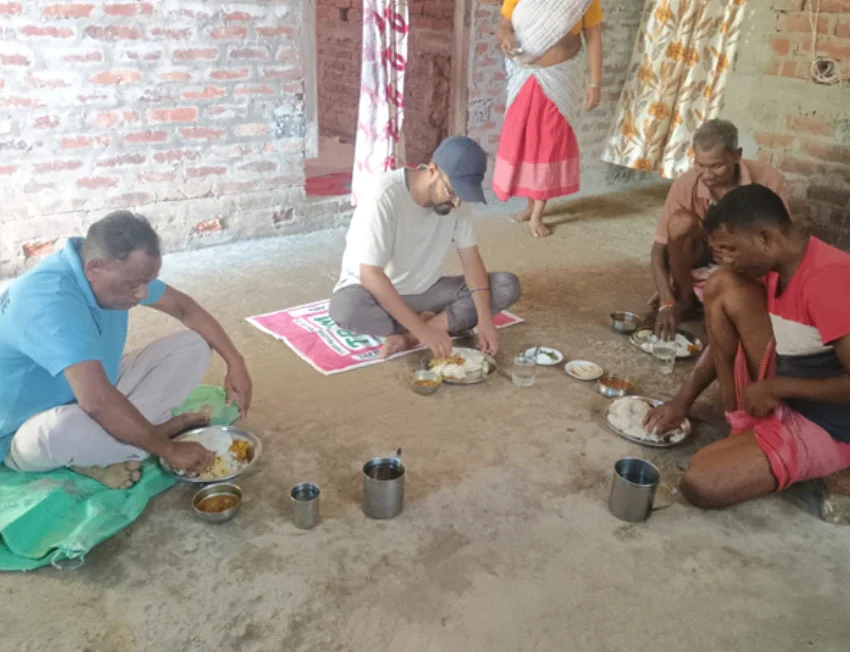
[ Photo- Having lunch with my Host Family]
Without lectures or lessons, they showed me what Sewa Bhav truly looks like. They cared for me, protected my comfort, and gave their time and space without expecting anything in return.
That realization hit me hard.
I understood that my earlier acts of help were not pure Sewa Bhav. I was helping, yes, but with expectations. What I experienced in that home was different. It was service without conditions.
When my Community Immersion ended, I returned to the field as a changed person. During VHSND sessions, I started reaching early. I helped ASHAs and Anganwadi workers with cleaning, arranging, and organizing. This time, there was no intention to build rapport or gain appreciation. I did it because it felt right.
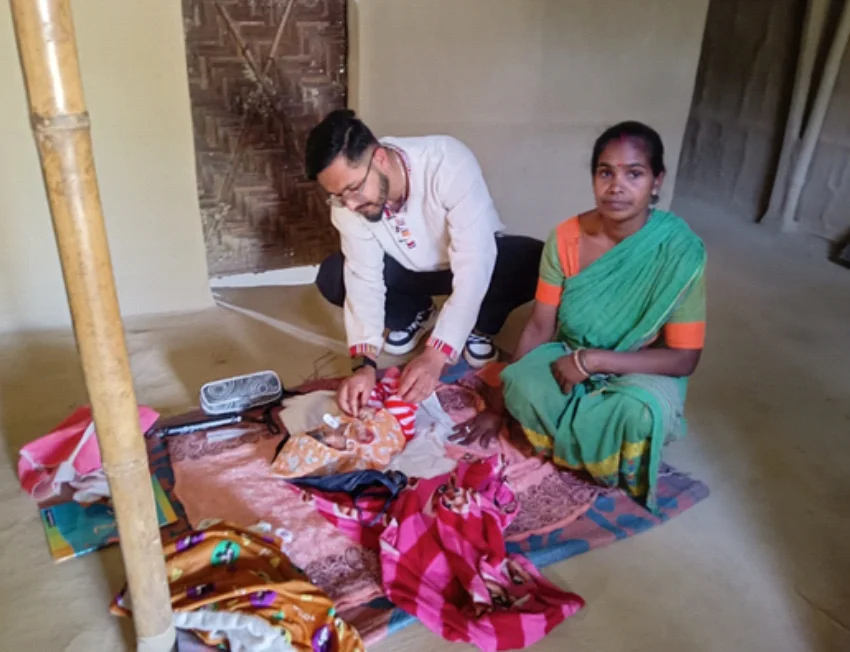
[Photo- Helping Asha didi with her daiuly routine check-up]
My relationships were already fine, yet this new way of working gave me a deep sense of peace and satisfaction.
The family I once feared became my second family in a distant land called Assam. The community I once judged became my greatest teacher. Through them, Sewa Bhav stopped being a word from induction slides. It became a lived experience, one that continues to guide my journey in the Gandhi Fellowship and post fellowship as well.