Fellow Initiatives

Young people from across India arrive with different backgrounds, languages, and lived experiences—but a shared intent to create change. They step out of their comfort zones and into communities where change is needed most, immersing themselves in villages, schools, hospitals, and public systems across multiple states. By listening deeply, identifying gaps, and working alongside communities and government stakeholders, Fellows take ownership of real-world challenges. Each initiative reflects courage, empathy, and learning through action. Together, these stories show how young leaders from across the country are creating meaningful impact far beyond their own states.
x

Akansha Pandey,

Originally from Madhya Pradesh and a student of the Science stream, is currently working in Jammu & Kashmir to strengthen socio-emotional learning in schools

Creating Safe Emotional Spaces Through the “Emotion Tree” Initiative

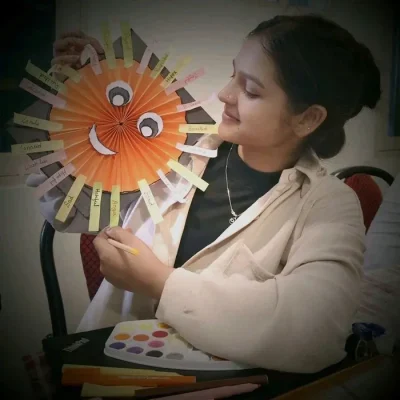
Gandhi Fellow Akansha Pandey, originally from Madhya Pradesh and a student of the Science stream, is currently working in Jammu & Kashmir to strengthen socio-emotional learning in schools. One of her most meaningful initiatives has been the creation of an Emotion Tree—a simple but powerful tool that welcomes every child before attendance, before academics, before discipline.

The concept is simple: children pause for a moment each morning, pick a leaf, and place it on the tree to express how they feel.
But the impact has been transformative.

Children who once stayed silent have begun to say:
Aaj main nervous hoon… tired hoon… hurt feel kar raha/rahi hoon.
They are naming emotions they experience daily but rarely get space to express.

While Akansha was making the tree, a group of students came forward and said,
Ma’am, main kuch emotions add karu kya?
They listed feelings like nervous, tired, weak, apologetic, hurt—reminding her that children carry emotional worlds that often go unseen in the rush of school routines.

This initiative reflects a simple truth:
Children don’t just need academics—they need permission to feel.
When schools make space for emotions, they make space for humans.

Through the Emotion Tree, Akansha is helping create classrooms where children feel heard, safe, and understood—laying the foundation for healthier, happier learning environments.

x

Payel Saha

Originally from West Bengal and a graduate in Mathematics, is currently working in Bihar to strengthen last-mile health delivery

Strengthening Last-Mile Health Delivery Through Digital Capacity Building

Gandhi Fellow Payel Saha, originally from West Bengal and a graduate in Mathematics, is currently working in Bihar to strengthen last-mile health delivery. During a district review at the Command & Control Centre, she identified a critical gap: 500+ ASHAs across the district were not regularly active on the m-ASHA application. This insight became the foundation of her digital capacity-building initiative.

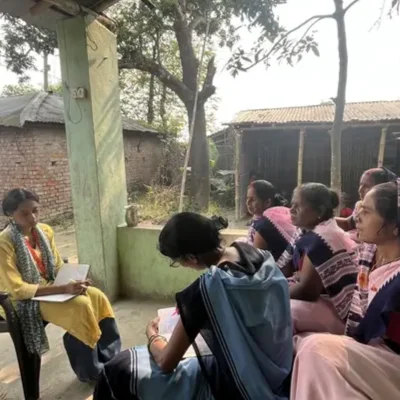
Payal began her intervention in Singheshwar Block, where 67 of 127 ASHAs were irregular in updating the app. She brought together ASHA Facilitators, district officials, and block leadership to conduct a focused, confidence-building training for 60+ ASHAs.

Her strategy combined practical learning with sustained support:

  • Hands-on app demonstrations to simplify key features
  • Small-group mentoring to address individual challenges
  • Real-time case entry to build comfort and accuracy
  • Continuous follow-ups through field visits and phone support
  • Collaboration with block officials to ensure sustained adoption

The result: the district has already acknowledged improved m-ASHA updates from Singheshwar, reflecting stronger digital participation at the grassroots.

Payal now plans to replicate this model across other blocks, contributing to a district-wide shift toward data-driven public health delivery.

Through initiatives like this, Fellows like Payal apply analytical thinking, community engagement, and leadership skills to solve real problems—strengthening public systems while growing as changemakers on the ground.

x

Ritika Adwani

Originally from Maharashtra and a graduate of the School of Economics and Commerce, is currently working in Bihar to strengthen public health systems

Driving Public Health Awareness Through Newborn Care Week Rally, Katihar

Gandhi Fellow Ritika Adwani, originally from Maharashtra and a graduate of the School of Economics and Commerce, is currently working in Bihar to strengthen public health systems. During the Newborn Care Week (15–21 November), she played a key role in organising a district-wide awareness campaign that culminated in a vibrant and impactful rally on November 19.

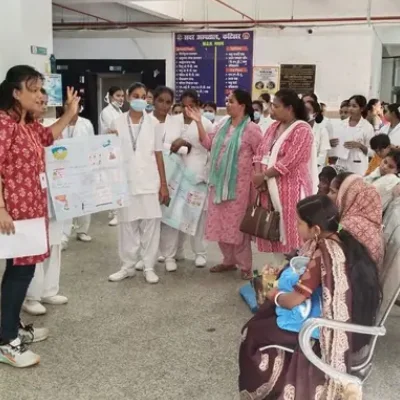
In coordination with the District Health Society (DHS) and District Hospital (DH), Ritika supported a series of sessions at the SNCU, where the Piramal Foundation team educated mothers and caregivers on newborn care essentials—breastfeeding, vaccination schedules, danger signs, and hygiene practices. A special session was also held on Prematurity Day to support families of preterm babies.

The week’s highlight was the Newborn Care Week Rally, launched from Sadar Hospital and inaugurated by senior district health officials. With active participation from doctors, nursing students, PPTCT counselors, and frontline workers, the rally spread key messages across the community—echoed loudly in chants like “Navjat Shishu ki suraksha, sabki zimmedari!”

The march concluded at the MCH building, where the team conducted a final awareness session on sanitation, hygiene, and government schemes for newborn health.

For Ritika, leading this large-scale public health event was a powerful growth experience. Coordinating with multiple government officials, mobilising participants, and addressing large crowds strengthened her leadership, communication, and stakeholder management skills—reinforcing her commitment to solving public health challenges at the grassroots.

Through initiatives like this, Fellows contribute directly to building healthier, more informed communities.

x

Sanmay Das

Originally from West Bengal, is a software engineer and alumnus of Sister Nivedita University, currently working in Madhya Pradesh to explore sustainable livelihood solutions for rural communities

From Water Scarcity to Sustainable Income: Mushroom Farming in Rural Madhya Pradesh

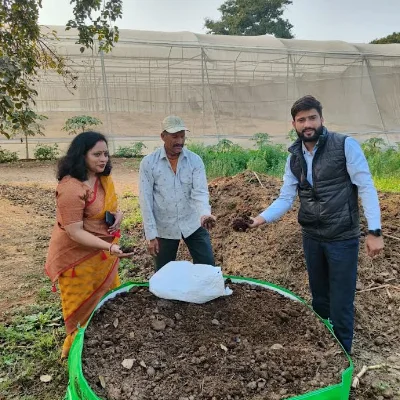
Gandhi Fellow Sanmay Das, originally from West Bengal, is a software engineer and alumnus of Sister Nivedita University, currently working in Madhya Pradesh to explore sustainable livelihood solutions for rural communities. During his field engagement, Sanmay observed a recurring challenge faced by farmers—4–5 months of water scarcity every year, declining farm incomes, and repeated crop losses despite high effort and long crop cycles.

Traditional farming practices in the region demand high water input and carry significant risk, often resulting in low or negative returns. In response, Sanmay explored mushroom farming as an alternative livelihood option—low on water, scalable, and capable of empowering both farmers and women.

The primary challenge was awareness. Most farmers were unfamiliar with mushrooms, and those who had heard of them lacked knowledge about cultivation, harvesting, and market access. With no local livelihood NGO support, Sanmay adopted a learning-by-doing approach. He mobilised a small group of interested farmers, raised funds, and travelled to Bhopal for paid mushroom cultivation training. He also identified two buyers willing to purchase mushrooms at fixed rates, reducing market risk.

A pilot was launched using 10 kg of mushroom spawn, cultivated across two locations—one farmer’s home and one tehsil-level government employee’s residence. Despite early setbacks, including damage to nearly 20% of grow bags, mushrooms began emerging within weeks, boosting farmer confidence.

Alongside production, Sanmay worked on demand creation by introducing mushroom fritters through local food vendors, helping normalise mushrooms in daily diets.

This initiative demonstrates how small, well-planned experiments can open pathways to resilient, low-risk livelihoods in water-stressed regions—turning uncertainty into opportunity, one grow bag at a time.

x

Nimmi Kumari Gunjan

Originally from Bihar with an academic background in Science, is currently working in Jharkhand to strengthen access to public services for marginalized communities

Enabling Access to Government Schemes Through Aadhaar Inclusion in Birhor Tola

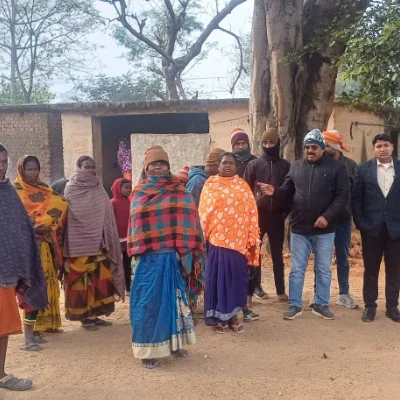
Gandhi Fellow Nimmi Kumari Gunjan, originally from Bihar with an academic background in Science, is currently working in Jharkhand to strengthen access to public services for marginalized communities. During her Community Immersion visits to Birhor Tola, she observed a critical gap—many children from the Birhor tribal community did not possess Aadhaar cards, limiting their access to essential government welfare schemes.

Recognising how documentation barriers directly affect service delivery, Nimmi actively supported the administration’s effort to address the issue. While the local administration initiated the Aadhaar enrollment camp, her role focused on ground-level facilitation and insight-building. She documented challenges faced by families, shared field observations with authorities, and supported coordination and community mobilization to ensure better participation.

As part of the preparation process, the Block Development Officer (BDO) visited Birhor Tola and NPS Gariai School to assess on-ground realities, infrastructure needs, and readiness for the camp. Nimmi’s continuous presence in the community helped bridge communication gaps between the administration and residents, ensuring that local concerns were understood and addressed.

This initiative reinforced an important lesson: small documentation gaps can create large systemic barriers. Working closely with the Birhor community highlighted the value of sustained field engagement, attentiveness, and collaboration in enabling inclusion.

Through such grassroots interventions, Gandhi Fellows contribute to making public systems more responsive—ensuring that the most marginalized communities are not left behind due to preventable gaps in access.

Facebook
YouTube
LinkedIn
Instagram